
– In January I received an unexpected message titled “Thumb Thumper” :
I made a thumb thumper out of a scrap of UHMW—ultra high molecular weight material. It is a very dense piece teflon plastic.
I’m not well enough versed in plastics to say much more than that, but it delivers one hell of a whack to my washboard. I hit upon the idea because I was upset about the sound of a thimble striking the cowbell. It was a “clink” not a “dong”.
I bough a pair of mallets and experimented with those. They have a lovely fat sound, but it was pretty much a matter of using a mallet or thimbles on a hand—you couldn’t have both at the same time. So I turned a bit of 1 1/2” UHMW that was 2” long on my lathe so that one end was rounded, and I carved the other end out for my thumb. Since my thumb is not round, I drilled the cavity undersized and then custom fitted it to my thumb with a dremel. I secure it to my thumb with a bit of Tubasti tubular rim cement (for attaching sew-up tires to bicycle rims). A drop of Tubasti smeared around with a Q-tip and allowed to cure for a week will give excellent retention for months.
I also use Tubasti for thimbles. Anyway, the Thumb Thumper gives a very heavy, powerful strike that makes a proper “dong” on the cowbell, but it also is a spectacular success for the cymbal, the wood blocks, the desk bell and the washboard. It makes a “fatter” washboard sound when strumming the ridges. Since thimbles can still be used on that hand, it is in addition to thimbles, not instead of thimbles. It doubles the amount of sonic color that I can get with my washboard. I’ll see if I can paste in a photo: Whoops, nope. Give me another way to communicate, and I will send a photo to you.
Ken Rasmussen
– As you can imagine I was extremely interested; so I did, and received the following images and info:
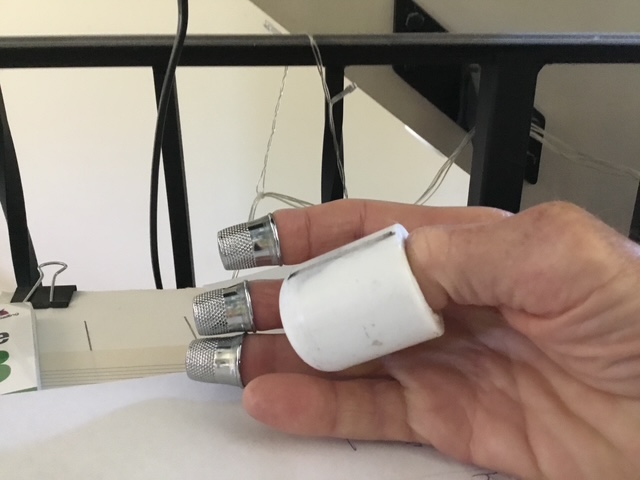
Here’s the Thumb Thumper. It sounds identical to my mallets.
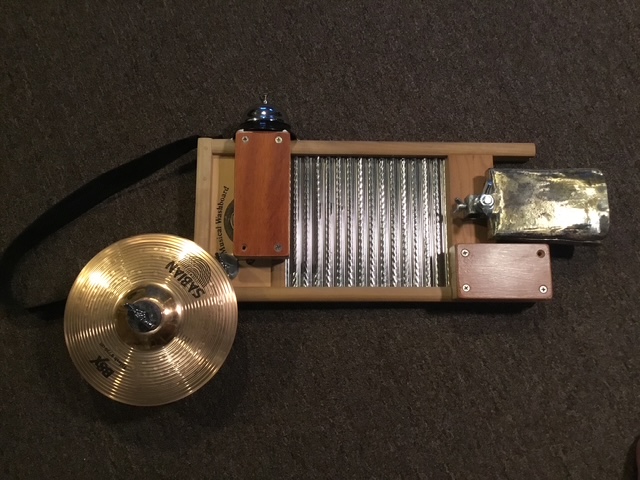
This is my washboard. The cowbell is probably about one hundred years old. It was flattened, cracked and had holes in it. I straightened it out, filled the holes and cracks with brazing rod, and added a mounting bracket. I liked the sound of it. I did not bother to paint it. My wife prefers the authenticity.
– He also included pictures of his kazoo & clarinet. I asked him for more details about the Thumb Thumper and mentioned I’d be happy to make a post about it; which he immediately agreed to.
Here are a couple more detail photos of the washboard. I reinforced the bottom rail of the washboard because the bell is heavy and long, and it would be easy to overstrain the original rail unless it was made stronger.
All the images of Ken’s washboard & Thumb Thumper: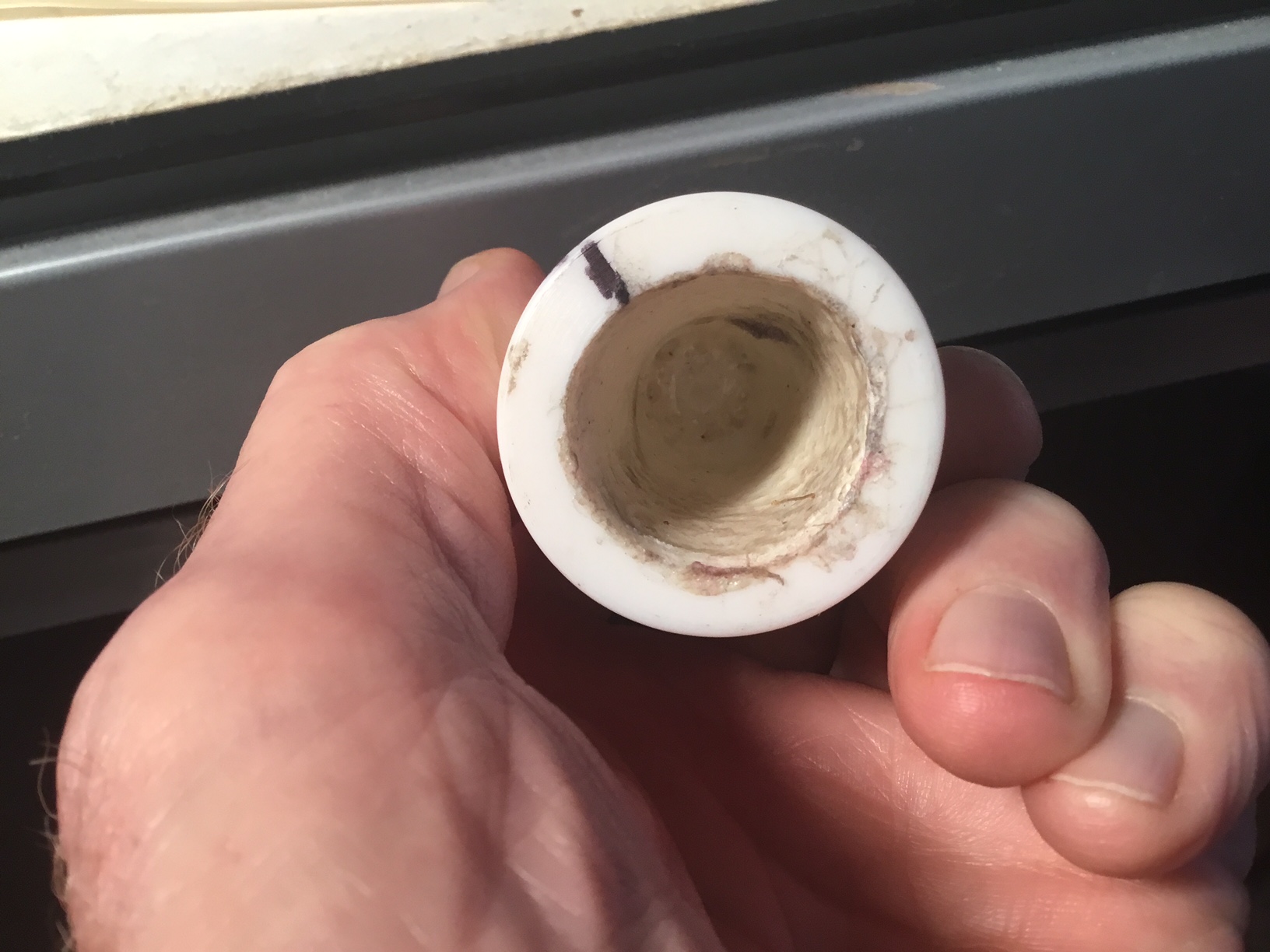
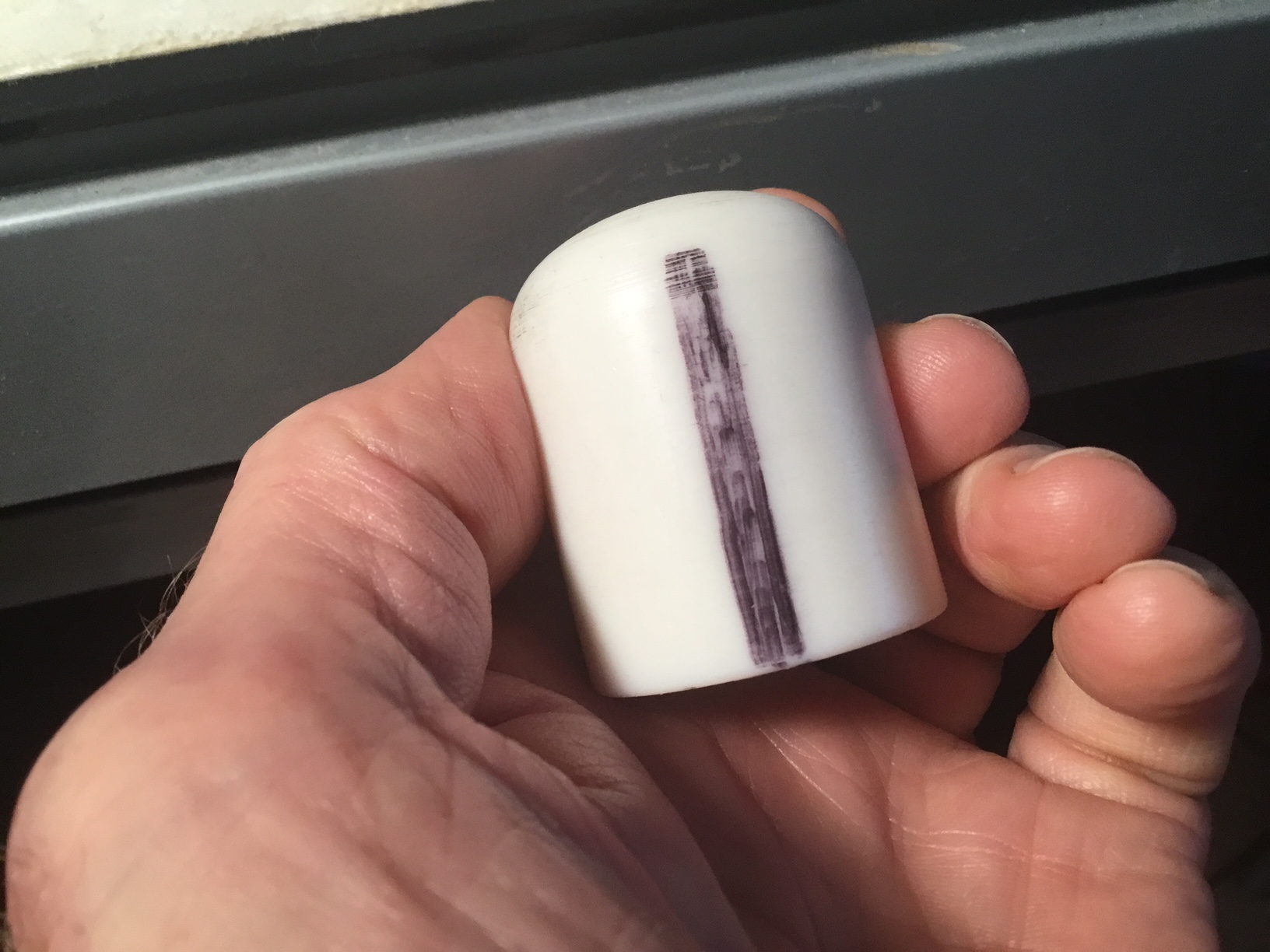
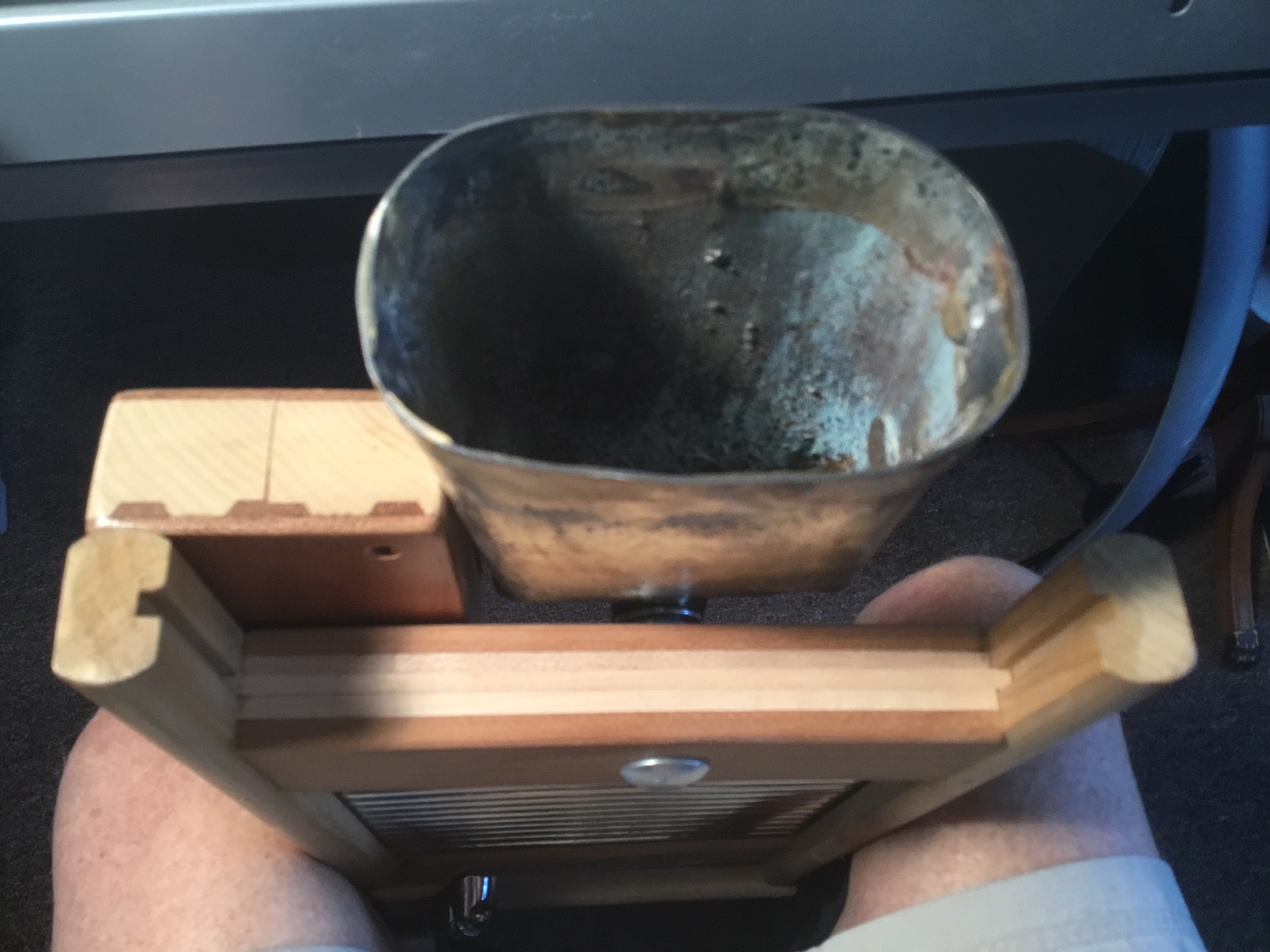
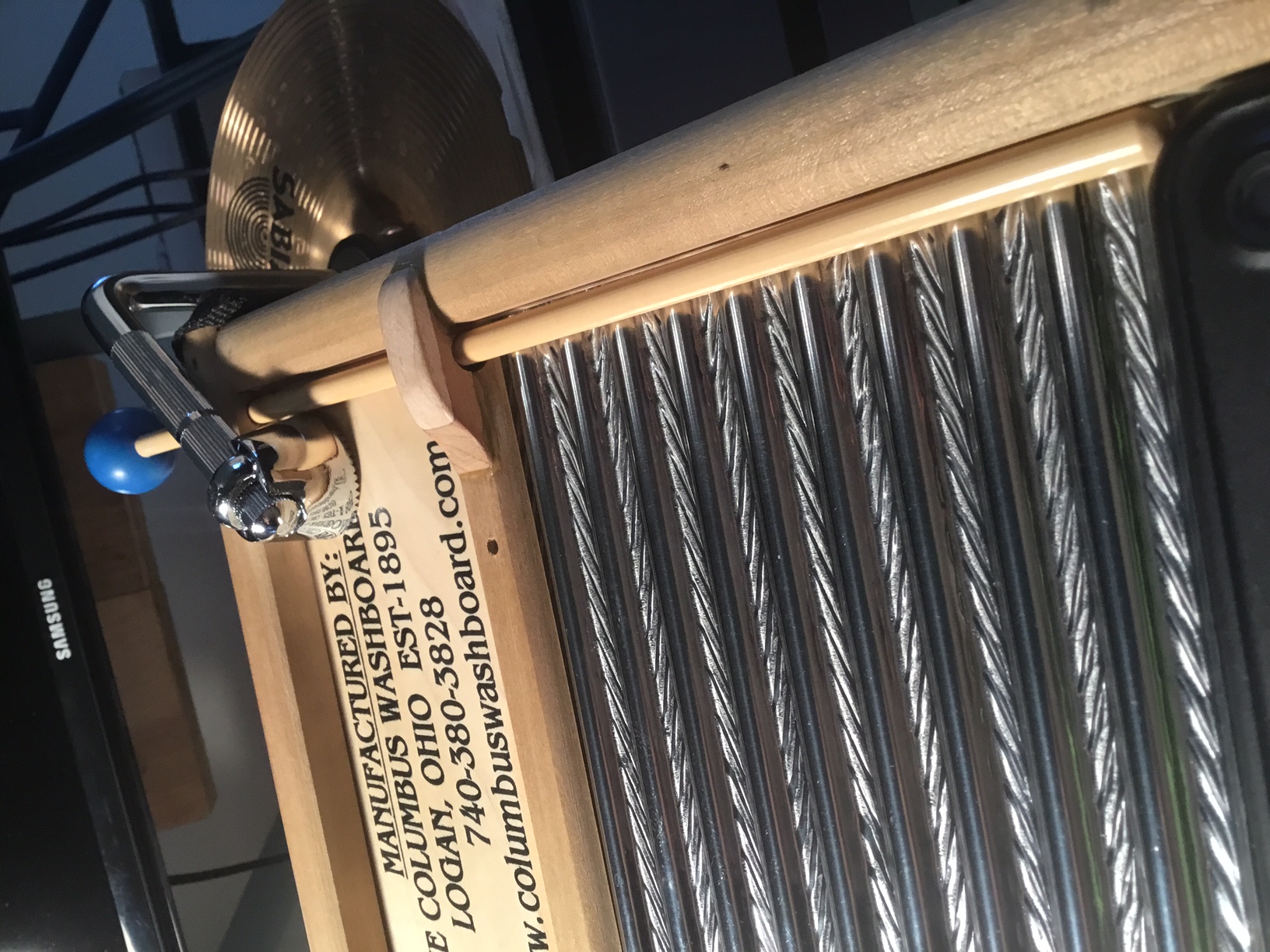
The stock that I used to make the Thumb Thumper was 1 1/2” round stock, a 2” length. I think that UHMW was the correct term for it—it’s been a lot of years since I worked in that machine shop, and there were several high tech plastic materials that we used. The thing that stands out about it is how heavy it is.
When I tested mallets, I found that the sound varied hugely. So I was very surprised when the Thumb Thumper sounded identical to the mallet that I had selected.
Since the Thumb Thumper is custom fitted to my right thumb by means of carving it with a dremel after roughing in a hole with a drill, it is necessary to orient it rotationally before I put it on. That is why there is a witness mark on it.
You can see Tubasti sew-up rim cement on the bore of the Thumb Thumper. I also use it in my thimbles. It doesn’t take much. It has to cure for several days after application. Even so, it’s initially too sticky, but it breaks in just about right.
– Wow, who would have thought! So cool.
As I had asked about the wood blocks he also added:
The wood blocks are made by Rick Whitaker. He’s President of the local Trad Jazz Society. We call him Washboard Rick; he also plays clarinet, as do I.
Since he was making them already and they sound good, I just bought some from Rick. He makes them with holes in all four corners so that there are more options for fitting them to washboards. I find that I can get different pitches by striking the sides of the wood blocks, or even the end on the bottom block. The Thumb Thumper lends itself to sideways thumping as well as the normal direction.
Other images Ken sent me: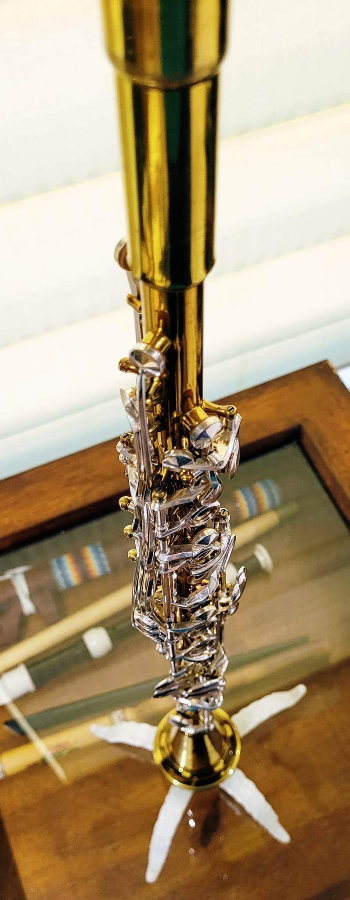
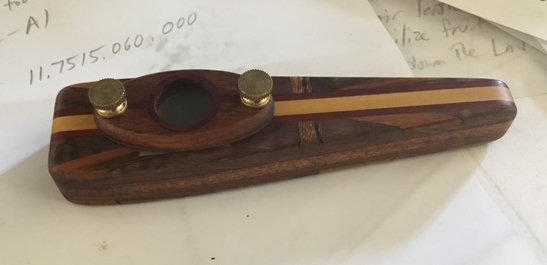
The kazoo was made by AppliedWizarding. He sells through Etsy: AppliedWizarding. Mine was custom made. It’s a very good kazoo. Probably the best. I recently realized that I wasn’t installing the membrane optimally. There is much to be gained or lost in the installation of the membrane.
It’s nice to become acquainted with you and your website! Thank you for your interest!
Ken Rasmussen
email hidden; JavaScript is required
Here’s a link to my cycling novella, Duarte:
Duarte @ amazon
I don’t know about you but I’m thrilled! Using UHMW, the Tubasti sew-up rim cement, the “flying buttress”..; so many great ideas. A big Shout Out & Thank You to Ken for sharing!